
By Ashley Land
Published 1 day ago
Ashley is a Rotten Tomatoes–approved critic and CBR MTV writer specializing in pulp comics, the DC Universe, and genre storytelling. With a passion for westerns, sci-fi, horror, and thrillers, he brings both critical analysis and fan enthusiasm to his coverage. A lifelong pop culture fan, Ashley writes features, reviews, and commentary that highlight the best fiction has to offer.
Since the golden age, Westerns have given viewers an endless stream of classics, from Tombstone and Shane to Unforgiven and Django Unchained. Building up impressive careers like John Wayne, Clint Eastwood and Kevin Costner, these films explore themes of redemption, revenge and heroism on the frontier. Boasting some of the best scripts in cinema, the Western is full of great quotes, but one film stands out for perfectly encapsulating the spirit of the genre.
The 1950s saw a wave of films that helped redefine the Western for Hollywood. Where High Noon challenged how viewers thought of the classic lawman story, epics like The Searchers pushed them to reckon with their prejudices in a revenge-driven rescue story. In 1953, director George Stevens and actor Alan Ladd handed America one of the most touching movies ever made. A combination of the classic Western and the new wave of revisionist stories, this movie produced perhaps the finest speech ever given in its genre. After seventy-two years, Shane's parting words to Joey are untouched and should be heard by anyone who wants to understand the quintessential gunslinger story.
Shane Redefined the Western Gunslinger Story
 Image via Paramount Pictures
Shane tells the story of a retired, but still tough, gunfighter who makes his way to a valley in Wyoming, whose people live in fear of a ruthless land baron named Rufus Ryker. He takes on work from the Starretts, a family of homesteaders fighting to keep their land from the villain. Their young son, Joey, soon warms to Shane, especially after he reveals his past as a gunslinger when he steps in to defend them from Ryker's men. As word of his actions spread to the antagonist, his methods escalate, forcing a confrontation between him and the hero.
From start to finish of the genre-defining Western, the audience is given the impression of Shane as being a man whose life has been defined by violence, as shown by how effortlessly he outdraws his opponents. He avoids bloodshed as best he can until he feels there's no other choice, but isn't afraid to kill a man if there's no alternative. Unlike more recent characters, there's no learning curve for the hero. From the moment he first gets involved, there's no doubt in anyone's mind that he's a competent killer.
The interesting part of his story doesn't come from his skills, but his moral code and how he bucks the traditional gunfighter archetype. Neither a lawman nor a duelist, he was something different for his time. After its release, Shane completely changed the way Hollywood thought of Western heroes. Before the film, the standard protagonist of the genre was a cavalry officer, lawman, upstanding small-town citizen, or the like, typically a reflection of the Hays Code rules.
Shane's Speech is a Flawless Part of Western History
 Image via Paramount Pictures
After defeating Ryker, an injured Shane saddles up to leave the valley, much to the sorrow of Joey. Seeing the boy's emotions, the hero delivers a speech that has since become one of the finest monologues ever written for film. As he states, "A man has to be what he is, Joey. Can't break the mold. I tried, and it didn't work for me. Joey, there's no living with the killing. There's no going back from one. Right and wrong is a brand. A brand sticks. There's no going back." Having said all he needs to, Shane rides off into the distant sunset, his fate ambiguous from a gunshot to his body. A poignant ending for a film that was almost never made.
The speech serves as a fantastic moment of self-awareness, as well as an amazing quote even for a Western, as Shane recognizes that he can't escape the consequences of his past, and doesn't wish that on Joey either. Like so many other characters of that era, he's seen enough blood to last a lifetime and doesn't want it anymore. When he rides into the valley at the start of the film, he's hoping for a fresh start. When he intervenes to defeat Ryker's men, he realizes he has no place in the world the Starretts are building. Instead of leaving Joey with an impression of him as a gunfighter, he uses his last moments with him to influence him towards something better, the life he wanted for himself after walking away from violence.
Shane is a man who, like so many gunslingers, was simply trying to find some peace and leave behind his past deeds. His final message is one of regret and warning to Joey, steering him away from the path of violence by explaining how it comes to define a man. Rather than have him follow in his own footsteps, he tries to explain to the child that real strength comes in being there for your family, not in gunfights and bloodshed. Like characters like William Munny, Josey Wales and JB Books, violence has a way of following him, and that's not the life he wants for Joey.
For a genre that so many interpret as glorifying violence, Shane's speech does a great job of proving the opposite. Although viewers may cheer when he kills the bad guys, his ultimate message is one against it, and warns those watching to pursue nobler causes than that. Unlike other Westerns, it treats the act of taking a life with the gravity it deserves, and tells those watching it's not something someone can ever walk away from.
Shane Still Influences Modern Westerns
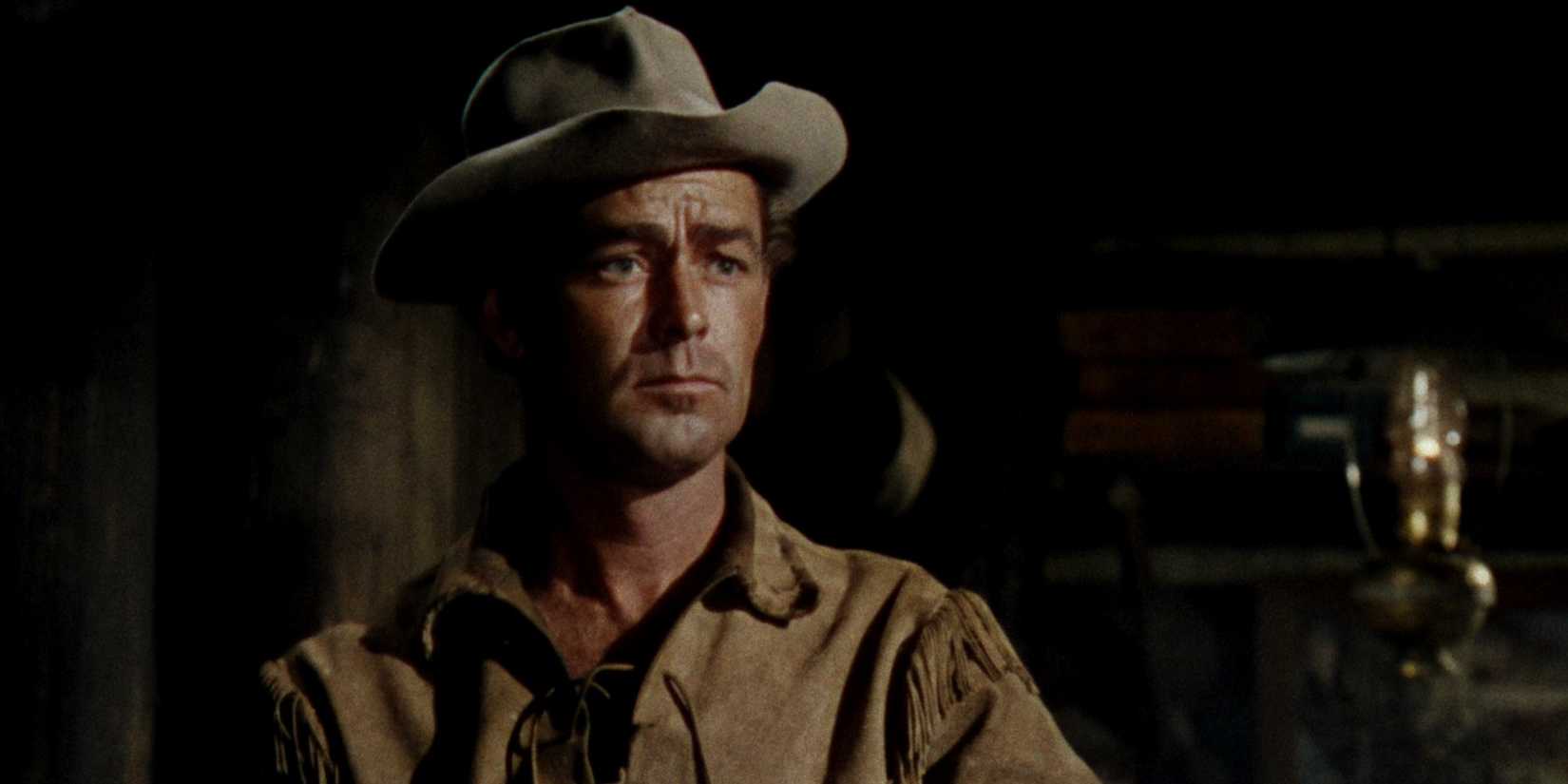 Image via Paramount Pictures
Since its release in 1953, Shane has become an influential part of Hollywood history, with the likes of Roger Ebert even praising it, creating its own template for the hero's journey. Before its release, the typical movie hero was a clean-cut John Wayne-type protagonist, one who stepped up to do the right thing and had a flawless record of heroism. In George Stevens' film, there was room added for nuance, giving viewers a man with a checkered past trying to move on to a simpler life. Anyone could glean from his words and actions an idea of the kind of man he was before hanging up his gun, but that's not what defines his story here. Instead, it's his acceptance of responsibility and how he steps up to be a hero when the community needs one.
When Shane rides off into the distance, it's a symbolic farewell to the gunslinger archetype itself, for which the new America has no need. With the Starretts and other homesteaders now safe, the hero can leave in the knowledge that a new world will be built behind him, and men like Ryker are no longer a threat. His speech signifies his acceptance of what he is and his place in the world. For viewers, his future is left open to interpretation. Some can choose to view him as a symbol, a man who's destined to ride from one town to the next to dispense more frontier justice. For others, his story is more poignant if it ends with his death after leaving Joey, truly symbolizing the end of an era.
Shane's story was certainly an optimistic one, standing in stark contrast to old-school Westerns like The Great Silence, Django, and The Wild Bunch. In a sense, the film is as much a send-off for the classic Western as anything else, with the story's music, aesthetics and characters all calling back to a simpler time for Hollywood Westerns. At different times, Ladd's character comes across as wise, dangerous, wholesome and somber, embodying everything a reformed outlaw on the frontier should.
The Old West was, among other things, a setting known for personal reinvention, something the hero strives for. In saving the Starretts, it's like the character is taking on a responsibility for his past actions, seeing the chance to make up for the man he used to be. Any of the classic "lone gunslinger becomes a hero" story owes something to Shane, and it's hard to find a film with as much cultural impact made since. In essence, the movie summed up the Wild West's version of the hero's journey, so it's only natural that all other films would trace something back to it, whether consciously or not.
Shane is One of the Most Remade Movies
 Image via 20th Century Studios
The basic idea behind Shane is one of the most retold in Hollywood history, inspiring everything from James Mangold's Logan to Clint Eastwood's Pale Rider. The influence of the character can even be found in Ryan Gosling's protagonist in Drive. In essence, the formula boils down to the idea of a repentant man of violence becoming a reluctant hero as his moral code and violent past make him the only person able to make a stand. Quite often, these stories serve as an opportunity for redemption, sometimes even ending with the deaths of these heroes to make way for a brighter future. The message is always clear: both the hero and villain represent a darker past, and their passing symbolizes a future that has no place for either of them.
While there are countless Westerns, few can claim to have defined their genres quite like Stevens' film. Every writer and director tries to leave their mark on the West, but not all are successful. The 1950s were packed full of classic masterpieces, from The Searchers to The Gunfighter, but Shane perfectly redefined the gunslinger story overnight, and Hollywood has been in love since.


