گیایی
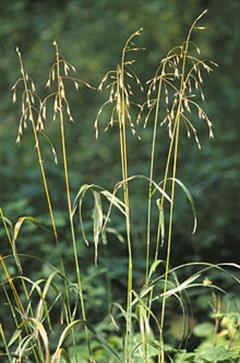
گیاه «نخج» (یا نخچ) در لغتنامهها و متون کهن (از جمله لغت فرس اسدی) به معنی علف جارو یا گیاه درشتی است که از صحرا میآوردهاند و زمین را با آن میروبیدهاند.
ابیاتی که آوردید متعلق به رودکی (و به روایتی طیان یا عماره) است که وضعیت پیرانِ سوزانندهی این علفها برای گرمایش یا کاربردهای دیگر را توصیف میکند.
نام علمی گیاه
گیاهی که در زبان فارسی و علم گیاهشناسی امروزی به عنوان «علف جارو» یا «جارو علفی» شناخته میشود، دارای دو نام علمی مطرح است:
Bassia scoparia(مترادف قدیمیتر: Kochia scoparia)خانواده:
اسفناجیان / تاجخروسیان (Amaranthaceae / Chenopodiaceae) توضیح:
این همان گیاه بوتهای، خشبی و دشتی یکسالهای است که در ایران و خاورمیانه بهطور سنتی خشک کرده و از شاخ و برگهای درشت و مقاوم آن برای ساخت جاروهای سنتی (علف جارو) استفاده میکردهاند.
Calluna vulgarisخانواده:
خلنگیان (Ericaceae) توضیح:
در منابع اروپایی و ترجمهها به آن Heather یا «علف جاروب» میگویند.
نتیجه: با توجه به زیستبوم ایران و توصیف متون کهن از گیاه صحرایی/دشتیِ «نخج»، معادل دقیق آن در گیاهشناسی امروزی همان
Bassia scoparia(جارو علفی / کوشیا) است.
/////////////////
جاروی قزوینی (نام علمی: Bassia scoparia) نام یک گونه از سرده پشمالو است.
نگارخانه
.jpg)
.jpg)
.jpg)


منابع
- مشارکتکنندگان ویکیپدیا. «Bassia scoparia». در دانشنامهٔ ویکیپدیای انگلیسی، بازبینیشده در ۱۴ مه ۲۰۱۶.
پیوند به بیرون

 | این یک مقالهٔ خرد زیستشناسی است. میتوانید با گسترش آن به ویکیپدیا کمک کنید. |
////////////////////////
القضقاض المكنسي (الاسم العلمي: Bassia scoparia) نبات حولي كبير من الفصيلة القطيفية. موطنه أوراسيا. أُدخل إلى أجزاء كثيرة من أمريكا الشمالية، حيث يوجد في الأراضي العشبية، والبراري، والأنظمة البيئية للشجيرات الصحراوية. ومن أسمائه الشائعة العشب الملتهب، عشبة الخنازير، السرو الصيفي، سرو زائف، كوتشيا، بلفيدير، فرشاة النار المكسيكية، الأعشاب النارية المكسيكية.

معرض صور
.jpg)
.jpg)
.jpg)


مراجع
- Bassia scoparia. USDA PLANTS. Retrieved October 19, 2007. نسخة محفوظة 17 أكتوبر 2019 على موقع واي باك مشين
- Kochia scoparia. نسخة محفوظة 2010-01-13 على موقع واي باك مشين USFS Fire Effects Information System.
- "Bassia scoparia"، شبكة معلومات موارد المواد الوراثية (GRIN)، دائرة البحوث الزراعية (ARS)، وزارة الزراعة الأمريكية (USDA)، اطلع عليه بتاريخ 2017-12-24
{{استشهاد}}: الوسيط|mode=CS1غير صالح (مساعدة)


//////////////////
Bassia scoparia is a large annual herb in the family Amaranthaceae (sensu lato) native to Eurasia. It has been introduced to many parts of North America,[1] where it is found in grassland, prairie, and desert shrub ecosystems.[2] Its common names include summer cypress,[2] mock-cypress, kochia, belvedere, World's Fair plant, burningbush,[1] Mexican firebrush, and Mexican fireweed,[3] with the latter three names referring to the herb's red autumn foliage.
Description
The fruit of Bassia scoparia with the calyx attached is dull brown, but when hulled, it reveals dull black seeds,[4] or dark to blackish-brown seeds in some escaped regions, such as Europe.[5]
The seeds are dispersed by wind and water and are transported when the whole plant detaches and rolls on the wind as a tumbleweed.[2] The seed does not persist in the soil seed bank, dying within about a year if it fails to germinate.[2] The species is a C4 plant, specifically of the NADP-ME type.[6][7] It develops herbicide resistance unusually quickly,[8] and quadruple-resistant populations have developed in North America.[8]
Bassia scoparia is native to a region ranging from Central Europe to Asia and is now widespread throughout the world. While having a variety of beneficial uses, it is also considered an invasive weed.[1]

Taxonomy
The species was first published in 1753 by Carl Linnaeus, who named it Chenopodium scoparium. In 1809, it was placed in the genus Kochia by Heinrich Schrader. It was transferred to Bassia in 1978 by Andrew J. Scott. Kochia was included in Bassia in 2011 following phylogenetic studies.[6]
Uses
This plant is grown as an ornamental plant as evergreen foliage for landscapes,[9] as well as for its red fall foliage. It has also been useful in erosion control on denuded soils.[10] It has been suggested as an agent of phytoremediation,[10] because it is a hyperaccumulator of chromium, lead, mercury, selenium, silver, zinc,[11] and uranium.[12]
Tonburi

In Japan the dull black seeds are used as a food garnish called tonburi (とんぶり) (Japanese).[13] Because its texture is similar to caviar, it has been called "land caviar",[14] "field caviar", and "mountain caviar".[13] It is a chinmi, or delicacy, in Akita prefecture.[15][13] The seed dish is prepared by boiling the seeds for about 30 minutes, soaking them in running water, and rubbing them in the hands to hull them.[15]
Traditional medicine
The seeds are used in traditional Chinese medicine to help regulate disorders such as hyperlipidemia, hypertension, obesity, and atherosclerosis. In a study of mice fed a high-fat diet, an extract of the seeds limited obesity.[16] They contain momordin Ic, a triterpene saponin.[17]
Foraging
The plant is a moderately useful forage for livestock, especially on dry lands.[18] The plant contains higher levels of protein and oxalate than most grasses and fodder plants.[9] However, its use is limited by its toxicity in large quantities.[19] Livestock ingesting large amounts can experience weight loss, hyperbilirubinemia, photosensitization, and polyuria.[20]
Brooms
The plant's common name in Japan is hahaki-gi (箒木) or hōki-gusa (箒草) which signify 'broom-tree' or 'broom-weed', and it has traditionally been used to make brooms.[13][21]
In Serbia and Bulgaria,[22] brooms are produced by simply tying several dried plants of this species together, using the branches as the broom head and the stems as the handle; this is convenient since the broom does not require a separate handle.[22]
Culture
Medieval Japanese legend has it that this broom tree would disappear from sight whenever approached, and Sakanoue no Korenori wrote a waka poem alluding to this myth.[21]
Gallery
 Form
Form Inflorescence
 As a weed
 Ornamental planting
 Mass planting at Hitachi Seaside Park, Japan.
.jpg)
.jpg)
.jpg)


See also
References
- Bassia scoparia. USDA PLANTS. Retrieved June 16, 2024.
- Kochia scoparia. Archived January 13, 2010, at the Wayback Machine USFS Fire Effects Information System.
- "Bassia scoparia". Germplasm Resources Information Network. Agricultural Research Service, United States Department of Agriculture. Retrieved 24 December 2017.
- Egginton, George E. (January 1921), "Colorado Weed Seeds", Bulletin - Colorado Agricultural Experiment Station (260): 38
- Bojnanský, Vít [in Slovak]; Fargašová, Agáta (2007). Atlas of Seeds and Fruits of Central and East-European Flora: The Carpathian Mountains Region. Springer Science & Business Media. p. 107. ISBN 9781402053610.
- Kadereit, Gudrun; Freitag, Helmut (2011). "Molecular phylogeny of Camphorosmeae (Camphorosmoideae, Chenopodiaceae): Implications for biogeography, evolution of C4-photosynthesis and taxonomy". Taxon. 60 (1): 51–78. Bibcode:2011Taxon..60...51K. doi:10.1002/tax.601006.[permanent dead link]
- Muhaidat R, Sage RF, Dengler NG (March 2007). "Diversity of Kranz anatomy and biochemistry in C4 eudicots". American Journal of Botany. 94 (3): 362–81. doi:10.3732/ajb.94.3.362. PMID 21636407.
- Kumar, Vipan; Jha, Prashant; Jugulam, Mithila; Yadav, Ramawatar; Stahlman, Phillip W. (2018-12-07). "Herbicide-Resistant Kochia (Bassia scoparia) in North America: A Review". Weed Science. 67. Weed Science Society of America: 4–15. doi:10.1017/wsc.2018.72. S2CID 91312866.
- "Kochia Scoparia". The Lovely Plants. Archived from the original on 2019-04-09. Retrieved 2022-06-06.
- Casey, P.A. (2009). "Plant guide for kochia (Kochia scoparia)" (PDF). Manhattan, Kansas: USDA Natural Resources Conservation Service, Kansas Plant Materials Center.
- McCutcheon; Schnoor (2003). Phytoremediation. New Jersey: John Wiley & Sons.[page needed]
- Schmidt U (2003). "Enhancing phytoextraction: the effect of chemical soil manipulation on mobility, plant accumulation, and leaching of heavy metals". Journal of Environmental Quality. 32 (6): 1939–54. doi:10.2134/jeq2003.1939. PMID 14674516.
- Dai Nihon Nōkai (1895). "Kochia Scoparia". Useful Plants of Japan Described and Illustrated. Agricultural Society of Japan. p. 80.
- Chiba, Machiko (2005). Japanese Dishes for Wine Lovers. Kodansha International. p. 117. ISBN 9784770030030.
- This is Japan. Asahi Shinbunsha. 1954. p. 117.
- Han LK, Nose R, Li W, et al. (October 2006). "Reduction of fat storage in mice fed a high-fat diet long term by treatment with saponins prepared from Kochia scoparia fruit". Phytotherapy Research. 20 (10): 877–82. doi:10.1002/ptr.1981. PMID 16892459. S2CID 25309137.
- Matsuda H, Li Y, Yamahara J, Yoshikawa M (May 1999). "Inhibition of gastric emptying by triterpene saponin, momordin Ic, in mice: roles of blood glucose, capsaicin-sensitive sensory nerves, and central nervous system". The Journal of Pharmacology and Experimental Therapeutics. 289 (2): 729–34. doi:10.1016/S0022-3565(24)38194-7. PMID 10215646.
- Rankins DL, Smith GS, Hallford DM (July 1991). "Serum constituents and metabolic hormones in sheep and cattle fed Kochia scoparia hay". Journal of Animal Science. 69 (7): 2941–6. doi:10.2527/1991.6972941x. PMID 1885403.
- Rankins DL, Smith GS, Hallford DM (September 1991). "Effects of metoclopramide on steers fed Kochia scoparia hay". Journal of Animal Science. 69 (9): 3699–705. doi:10.2527/1991.6993699x. PMID 1938652.
- Rankins DL, Smith GS, Hallford DM (July 1991). "Altered metabolic hormones, impaired nitrogen retention, and hepatotoxicosis in lambs fed Kochia scoparia hay". Journal of Animal Science. 69 (7): 2932–40. doi:10.2527/1991.6972932x. PMID 1885402.
- Cranston, Edwin A. (1993). A Waka Anthology: Grasses of remembrance (2 v.). Stanford University Press. p. 698. ISBN 9780804748254.
- "Hero korova metla 2012" (in Serbian). Retrieved 2017-01-16.
External links


////////////////////////
باسیا اسکوپاریا گیاهی یک ساله و بزرگ از خانواده آمارانتاسه (سنسو لاتو) و بومی اوراسیا است. این گیاه به بسیاری از نقاط آمریکای شمالی معرفی شده است،[1] جایی که در اکوسیستمهای علفزار، دشت و بوتههای بیابانی یافت میشود.[2] نامهای رایج آن شامل سرو تابستانی،[2] سرو خرزهره، کوچیا، بلودر، گیاه نمایشگاه جهانی، بوته سوزان،[1] بوته آتش مکزیکی و علف آتش مکزیکی است،[3] که سه نام آخر به شاخ و برگ قرمز پاییزی این گیاه اشاره دارد. توضیحات میوه باسیا اسکوپاریا با کاسه گل متصل به آن قهوهای کدر است، اما وقتی پوست آن کنده میشود، دانههای سیاه کدر را نشان میدهد،[4] یا در برخی مناطق دورافتاده مانند اروپا، دانههای تیره تا قهوهای مایل به سیاه دیده میشود.[5] دانهها توسط باد و آب پراکنده میشوند و هنگامی که کل گیاه جدا میشود و مانند یک تاج خروس در باد میغلتد، منتقل میشوند.[2] بذر در بانک بذر خاک دوام نمیآورد و اگر جوانه نزند، ظرف حدود یک سال میمیرد.[2] این گونه یک گیاه C4، به ویژه از نوع NADP-ME است.[6][7] این گیاه به سرعت غیرمعمولی در برابر علفکشها مقاومت میکند[8] و جمعیتهای مقاوم به چهار علفکش در آمریکای شمالی توسعه یافتهاند.[8] Bassia scoparia بومی منطقهای از اروپای مرکزی تا آسیا است و اکنون در سراسر جهان گسترده شده است. در حالی که کاربردهای مفید متنوعی دارد، به عنوان یک علف هرز مهاجم نیز در نظر گرفته میشود.[1] عکس نمای نزدیک از Bassia scoparia که در فضای باز و در نور طبیعی گرفته شده است. در هند گرفته شده است. طبقهبندی این گونه برای اولین بار در سال 1753 توسط کارل لینه منتشر شد که آن را Chenopodium scoparium نامید. در سال 1809، توسط هاینریش شریدر در جنس Kochia قرار گرفت. در سال 1978 توسط اندرو جی. اسکات به Bassia منتقل شد. Kochia در سال 2011 پس از مطالعات فیلوژنتیکی در Bassia گنجانده شد.[6] کاربردها این گیاه به عنوان یک گیاه زینتی به عنوان شاخ و برگ همیشه سبز برای مناظر،[9] و همچنین به دلیل شاخ و برگ قرمز پاییزی آن کشت میشود. همچنین در کنترل فرسایش در خاکهای برهنه مفید بوده است.[10] به عنوان یک عامل گیاه پالایی پیشنهاد شده است،[10] زیرا تجمع دهنده بیش از حد کروم، سرب، جیوه، سلنیوم، نقره، روی،[11] و اورانیوم است.[12] تونبوری "تونبوری" به اینجا تغییر مسیر میدهد؛ نباید با تونبوری اشتباه گرفته شود. تونبوری تونبوری در ژاپن از دانههای سیاه کدر به عنوان چاشنی غذا به نام تونبوری (とんぶり) (ژاپنی) استفاده میشود.[13] از آنجا که بافت آن شبیه خاویار است، به آن "خاویار زمینی"،[14] "خاویار صحرایی" و "خاویار کوهستانی" گفته میشود.[13] این یک چینی یا غذای لذیذ در استان آکیتا است.[15][13] غذای مخصوص دانهها با جوشاندن دانهها به مدت حدود 30 دقیقه، خیساندن آنها در آب جاری و مالیدن آنها در دست برای پوست کندن تهیه میشود.[15] طب سنتی این دانهها در طب سنتی چینی برای کمک به تنظیم اختلالاتی مانند چربی خون بالا، فشار خون بالا، چاقی و تصلب شرایین استفاده میشوند. در مطالعهای روی موشهایی که با رژیم غذایی پرچرب تغذیه میشدند، عصاره دانهها چاقی را محدود کرد.[16] آنها حاوی momordin Ic، یک ساپونین تریترپن هستند.[17] جستجوی علوفه این گیاه یک علوفه نسبتاً مفید برای دامها، به ویژه در زمینهای خشک است.[18] این گیاه حاوی مقادیر بیشتری پروتئین و اگزالات نسبت به اکثر علفها و گیاهان علوفهای است.[9] با این حال، استفاده از آن به دلیل سمیت آن در مقادیر زیاد محدود است.[19] مصرف مقادیر زیاد آن توسط دام میتواند باعث کاهش وزن، افزایش بیلیروبین خون، حساسیت به نور و پرادراری شود.[20] جاروها نام رایج این گیاه در ژاپن هاهاکی-گی (箒木) یا هوکی-گوس (箒草) است که به معنای «درخت جارو» یا «علف هرز جارو» است و به طور سنتی برای ساخت جارو استفاده میشده است.[13][21] در صربستان و بلغارستان،[22] جاروها با بستن چندین گیاه خشک از این گونه به یکدیگر، با استفاده از شاخهها به عنوان سر جارو و ساقهها به عنوان دسته، تولید میشوند. این روش راحت است زیرا جارو به دسته جداگانهای نیاز ندارد.[22] فرهنگ افسانههای قرون وسطایی ژاپن میگویند که این درخت جارو هر زمان که نزدیک میشد از دید ناپدید میشد و ساکانوئه نو کورنوری شعری به نام واکا سروده است که به این افسانه اشاره دارد.[21] گالری فرم فرم گلآذین گلآذین به عنوان علف هرز به عنوان علف هرز کاشت زینتی کاشت زینتی کاشت انبوه در پارک ساحلی هیتاچی، ژاپن. کاشت انبوه در پارک ساحلی هیتاچی، ژاپن. همچنین ببینید آللوپاتی منابع Bassia scoparia. USDA PLANTS. بازیابی شده در 16 ژوئن 2024. Kochia scoparia. بایگانی شده در 13 ژانویه 2010، در Wayback Machine USFS Fire Effects Information System. "Bassia scoparia". شبکه اطلاعات منابع ژرمپلاسم. خدمات تحقیقات کشاورزی، وزارت کشاورزی ایالات متحده. بازیابی شده در 24 دسامبر 2017. Egginton, George E. (ژانویه 1921)، "بذرهای علف هرز کلرادو"، بولتن - ایستگاه آزمایش کشاورزی کلرادو (260): 38 Bojnanský, Vít [به اسلواکی]؛ فارگاشووا، آگاتا (2007). اطلس دانهها و میوههای فلور اروپای مرکزی و شرقی: منطقه کوههای کارپات. انتشارات علوم و تجارت اسپرینگر. صفحه 107. شابک 9781402053610. کادریت، گودرون؛ فریتاگ، هلموت (2011). "فیلوژنی مولکولی کامفوروسمئائه (Camphorosmoideae، Chenopodiaceae): پیامدهایی برای جغرافیای زیستی، تکامل فتوسنتز C4 و طبقهبندی". تاکسون. 60 (1): 51–78. کد کتاب: 2011 تاکسون..60...51K. doi:10.10
////////////////////////
Bassia scoparia is a large annual herb in the family Amaranthaceae (sensu lato) native to Eurasia. It has been introduced to many parts of North America,[1] where it is found in grassland, prairie, and desert shrub ecosystems.[2] Its common names include summer cypress,[2] mock-cypress, kochia, belvedere, World's Fair plant, burningbush,[1] Mexican firebrush, and Mexican fireweed,[3] with the latter three names referring to the herb's red autumn foliage.
Description
The fruit of Bassia scoparia with the calyx attached is dull brown, but when hulled, it reveals dull black seeds,[4] or dark to blackish-brown seeds in some escaped regions, such as Europe.[5]
The seeds are dispersed by wind and water and are transported when the whole plant detaches and rolls on the wind as a tumbleweed.[2] The seed does not persist in the soil seed bank, dying within about a year if it fails to germinate.[2] The species is a C4 plant, specifically of the NADP-ME type.[6][7] It develops herbicide resistance unusually quickly,[8] and quadruple-resistant populations have developed in North America.[8]
Bassia scoparia is native to a region ranging from Central Europe to Asia and is now widespread throughout the world. While having a variety of beneficial uses, it is also considered an invasive weed.[1]
Taxonomy
The species was first published in 1753 by Carl Linnaeus, who named it Chenopodium scoparium. In 1809, it was placed in the genus Kochia by Heinrich Schrader. It was transferred to Bassia in 1978 by Andrew J. Scott. Kochia was included in Bassia in 2011 following phylogenetic studies.[6]
Uses
This plant is grown as an ornamental plant as evergreen foliage for landscapes,[9] as well as for its red fall foliage. It has also been useful in erosion control on denuded soils.[10] It has been suggested as an agent of phytoremediation,[10] because it is a hyperaccumulator of chromium, lead, mercury, selenium, silver, zinc,[11] and uranium.[12]
Tonburi
In Japan the dull black seeds are used as a food garnish called tonburi (とんぶり) (Japanese).[13] Because its texture is similar to caviar, it has been called "land caviar",[14] "field caviar", and "mountain caviar".[13] It is a chinmi, or delicacy, in Akita prefecture.[15][13] The seed dish is prepared by boiling the seeds for about 30 minutes, soaking them in running water, and rubbing them in the hands to hull them.[15]
Traditional medicine
The seeds are used in traditional Chinese medicine to help regulate disorders such as hyperlipidemia, hypertension, obesity, and atherosclerosis. In a study of mice fed a high-fat diet, an extract of the seeds limited obesity.[16] They contain momordin Ic, a triterpene saponin.[17]
Foraging
The plant is a moderately useful forage for livestock, especially on dry lands.[18] The plant contains higher levels of protein and oxalate than most grasses and fodder plants.[9] However, its use is limited by its toxicity in large quantities.[19] Livestock ingesting large amounts can experience weight loss, hyperbilirubinemia, photosensitization, and polyuria.[20]
Brooms
The plant's common name in Japan is hahaki-gi (箒木) or hōki-gusa (箒草) which signify 'broom-tree' or 'broom-weed', and it has traditionally been used to make brooms.[13][21]
In Serbia and Bulgaria,[22] brooms are produced by simply tying several dried plants of this species together, using the branches as the broom head and the stems as the handle; this is convenient since the broom does not require a separate handle.[22]
Culture
Medieval Japanese legend has it that this broom tree would disappear from sight whenever approached, and Sakanoue no Korenori wrote a waka poem alluding to this myth.[21]
Gallery
- Form
- Inflorescence
- As a weed
- Ornamental planting
- Mass planting at Hitachi Seaside Park, Japan.
See also
References
- Bassia scoparia. USDA PLANTS. Retrieved June 16, 2024.
- Kochia scoparia. Archived January 13, 2010, at the Wayback Machine USFS Fire Effects Information System.
- "Bassia scoparia". Germplasm Resources Information Network. Agricultural Research Service, United States Department of Agriculture. Retrieved 24 December 2017.
- Egginton, George E. (January 1921), "Colorado Weed Seeds", Bulletin - Colorado Agricultural Experiment Station (260): 38
- Bojnanský, Vít [in Slovak]; Fargašová, Agáta (2007). Atlas of Seeds and Fruits of Central and East-European Flora: The Carpathian Mountains Region. Springer Science & Business Media. p. 107. ISBN 9781402053610.
- Kadereit, Gudrun; Freitag, Helmut (2011). "Molecular phylogeny of Camphorosmeae (Camphorosmoideae, Chenopodiaceae): Implications for biogeography, evolution of C4-photosynthesis and taxonomy". Taxon. 60 (1): 51–78. Bibcode:2011Taxon..60...51K. doi:10.1002/tax.601006.[permanent dead link]
- Muhaidat R, Sage RF, Dengler NG (March 2007). "Diversity of Kranz anatomy and biochemistry in C4 eudicots". American Journal of Botany. 94 (3): 362–81. doi:10.3732/ajb.94.3.362. PMID 21636407.
- Kumar, Vipan; Jha, Prashant; Jugulam, Mithila; Yadav, Ramawatar; Stahlman, Phillip W. (2018-12-07). "Herbicide-Resistant Kochia (Bassia scoparia) in North America: A Review". Weed Science. 67. Weed Science Society of America: 4–15. doi:10.1017/wsc.2018.72. S2CID 91312866.
- "Kochia Scoparia". The Lovely Plants. Archived from the original on 2019-04-09. Retrieved 2022-06-06.
- Casey, P.A. (2009). "Plant guide for kochia (Kochia scoparia)" (PDF). Manhattan, Kansas: USDA Natural Resources Conservation Service, Kansas Plant Materials Center.
- McCutcheon; Schnoor (2003). Phytoremediation. New Jersey: John Wiley & Sons.[page needed]
- Schmidt U (2003). "Enhancing phytoextraction: the effect of chemical soil manipulation on mobility, plant accumulation, and leaching of heavy metals". Journal of Environmental Quality. 32 (6): 1939–54. doi:10.2134/jeq2003.1939. PMID 14674516.
- Dai Nihon Nōkai (1895). "Kochia Scoparia". Useful Plants of Japan Described and Illustrated. Agricultural Society of Japan. p. 80.
- Chiba, Machiko (2005). Japanese Dishes for Wine Lovers. Kodansha International. p. 117. ISBN 9784770030030.
- This is Japan. Asahi Shinbunsha. 1954. p. 117.
- Han LK, Nose R, Li W, et al. (October 2006). "Reduction of fat storage in mice fed a high-fat diet long term by treatment with saponins prepared from Kochia scoparia fruit". Phytotherapy Research. 20 (10): 877–82. doi:10.1002/ptr.1981. PMID 16892459. S2CID 25309137.
- Matsuda H, Li Y, Yamahara J, Yoshikawa M (May 1999). "Inhibition of gastric emptying by triterpene saponin, momordin Ic, in mice: roles of blood glucose, capsaicin-sensitive sensory nerves, and central nervous system". The Journal of Pharmacology and Experimental Therapeutics. 289 (2): 729–34. doi:10.1016/S0022-3565(24)38194-7. PMID 10215646.
- Rankins DL, Smith GS, Hallford DM (July 1991). "Serum constituents and metabolic hormones in sheep and cattle fed Kochia scoparia hay". Journal of Animal Science. 69 (7): 2941–6. doi:10.2527/1991.6972941x. PMID 1885403.
- Rankins DL, Smith GS, Hallford DM (September 1991). "Effects of metoclopramide on steers fed Kochia scoparia hay". Journal of Animal Science. 69 (9): 3699–705. doi:10.2527/1991.6993699x. PMID 1938652.
- Rankins DL, Smith GS, Hallford DM (July 1991). "Altered metabolic hormones, impaired nitrogen retention, and hepatotoxicosis in lambs fed Kochia scoparia hay". Journal of Animal Science. 69 (7): 2932–40. doi:10.2527/1991.6972932x. PMID 1885402.
- Cranston, Edwin A. (1993). A Waka Anthology: Grasses of remembrance (2 v.). Stanford University Press. p. 698. ISBN 9780804748254.
- "Hero korova metla 2012" (in Serbian). Retrieved 2017-01-16.
External links
////////////////////
نام علمی گیاهی که در منابع گیاهشناسی و فرهنگ واژگان به عنوان «جاروی رشتی» (یا ذرت خوشهای/جارویی) شناخته میشود، Sorghum bicolor (و بهویژه واریتهی جارویی آن یعنی Sorghum bicolor var. technicum) است.
تفاوت جاروی قزوینی و جاروی رشتی
در فرهنگ زراعی و گیاهشناسی ایران، این دو نام به دو سرده و خانوادهی کاملاً متفاوت اشاره دارند:
گیاه Sorghum bicolor var. technicum به دلیل انشعابات فراوان، بلند و الاستیک در قسمت خوشه، از قدیم بهصورت زراعی کشت میشده تا از رشتههای خوشهی آن برای ساخت جاروهای دستی محکم (معروف به جاروی رشتی یا جاروی بامیه) استفاده شود.
///////////////////