Morocco honors Trump with name change

Morocco has named one of its largest road projects after US President Donald Trump, describing the gesture as an expression of “deep appreciation” for his role in strengthening relations between Washington and Rabat.
King Mohammed VI informed Trump in a letter reported by the state-run Moroccan News Agency (MAP) on Sunday that the 1,055km Tiznit-Dakhla Expressway would be renamed the “Donald J. Trump Highway.”
The monarch said that bilateral relations, traditionally rooted in friendship and loyalty, have become particularly “vibrant and fruitful” during Trump’s two presidential terms.
”Your historic recognition, in 2020, of Morocco’s sovereignty over its Sahara will forever be etched in the memory of Moroccans, from one generation to the next,” the king wrote in a previously undisclosed letter dated July 2.
Trump thanked the monarch in a July 26 post on his Truth Social platform, describing the decision as a “great honor” and expressing hope that he would travel the highway’s entire length.

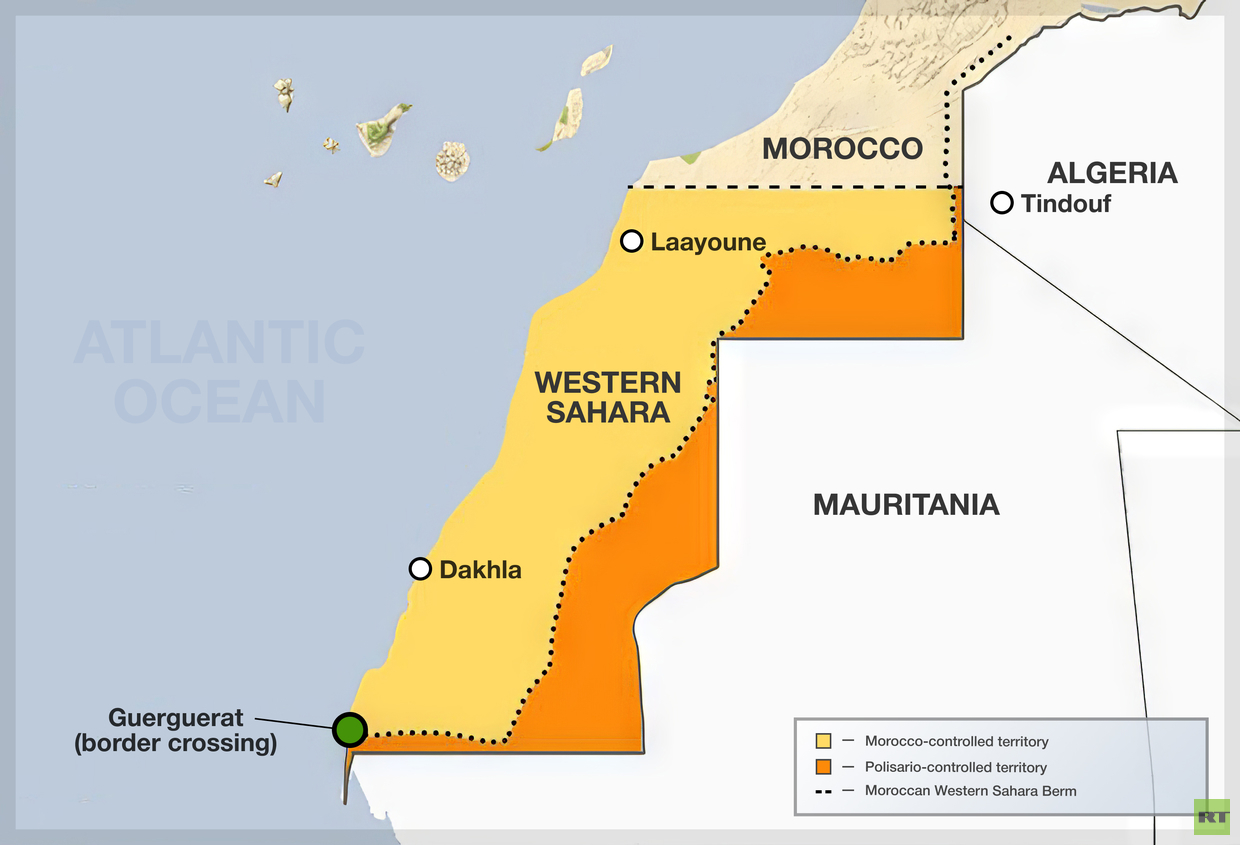
The road connects Tiznit in southern Morocco with Dakhla in the disputed Western Sahara region, passing through Guelmim and Laayoune along the Atlantic coast.
Rabat considers Western Sahara part of its territory and took control of most of the former Spanish colony after Spain withdrew in 1975. The Algeria-backed Polisario Front seeks to establish an independent Sahrawi state. A UN-brokered ceasefire took effect in 1991, but efforts to hold a referendum on the territory’s status have stalled.
Morocco submitted an autonomy proposal for Western Sahara to the UN Security Council in April 2007. Under the plan, local authorities would exercise executive, legislative, and judicial powers, while the territory would retain the Moroccan flag and currency. Rabat would remain responsible for foreign policy, national security, and defense.
The US became the first country to formally recognize Moroccan sovereignty over Western Sahara during Trump’s first term in 2020. Washington has maintained that position, with Trump recently reiterating support for Morocco’s autonomy proposal as the only basis for resolving the dispute.

Morocco is considered one of America’s oldest allies and its longest-standing partner in Africa. Rabat says it became the first country to recognize US independence in 1777. The two countries signed a Treaty of Peace and Friendship in 1786, establishing what Washington describes as its longest unbroken treaty relationship.
The US designated Morocco a major non-NATO ally in 2004. A bilateral free-trade agreement took effect two years later, making Morocco the only African country with such an accord with Washington. US exports to Morocco reached $5.5 billion in 2025, according to the Office of the US Trade Representative.
Morocco also hosts African Lion, the US Africa Command’s largest annual military exercise on the continent.
The close relationship has also featured in speculations surrounding the recent mass migrant crossings from Morocco into the Spanish enclave of Ceuta. El País reported that some members of Spain’s governing coalition suspected that the crisis may have been orchestrated by Rabat with US and Israeli support to pressure Madrid over its foreign policy, including its opposition to military action against Iran. Neither Washington nor Rabat has responded directly to the allegation.

The decision to rename the highway has drawn criticism from Western Sahara Resource Watch, an advocacy group that describes the disputed territory as “Africa’s last colony.” Its representative Roberto Cantoni told Spanish newspaper El Independiente that the renaming was intended “not to promote trade with the US, but to inflate the president’s ego.”
Algeria, which supports the Polisario Front and rejects Rabat’s proposal to grant Western Sahara autonomy under Moroccan sovereignty, has not officially responded to the highway’s naming. However, Algerian daily El Watan accused Morocco of “selling off its diplomacy on the altar of flattery toward Trump.”

Gunmen kill 12 and abduct women and children in northwest Nigeria

At least 12 people have been killed and an unspecified number of women and children abducted in an attack by gunmen in northwestern Nigeria, Reuters has reported, citing local residents.
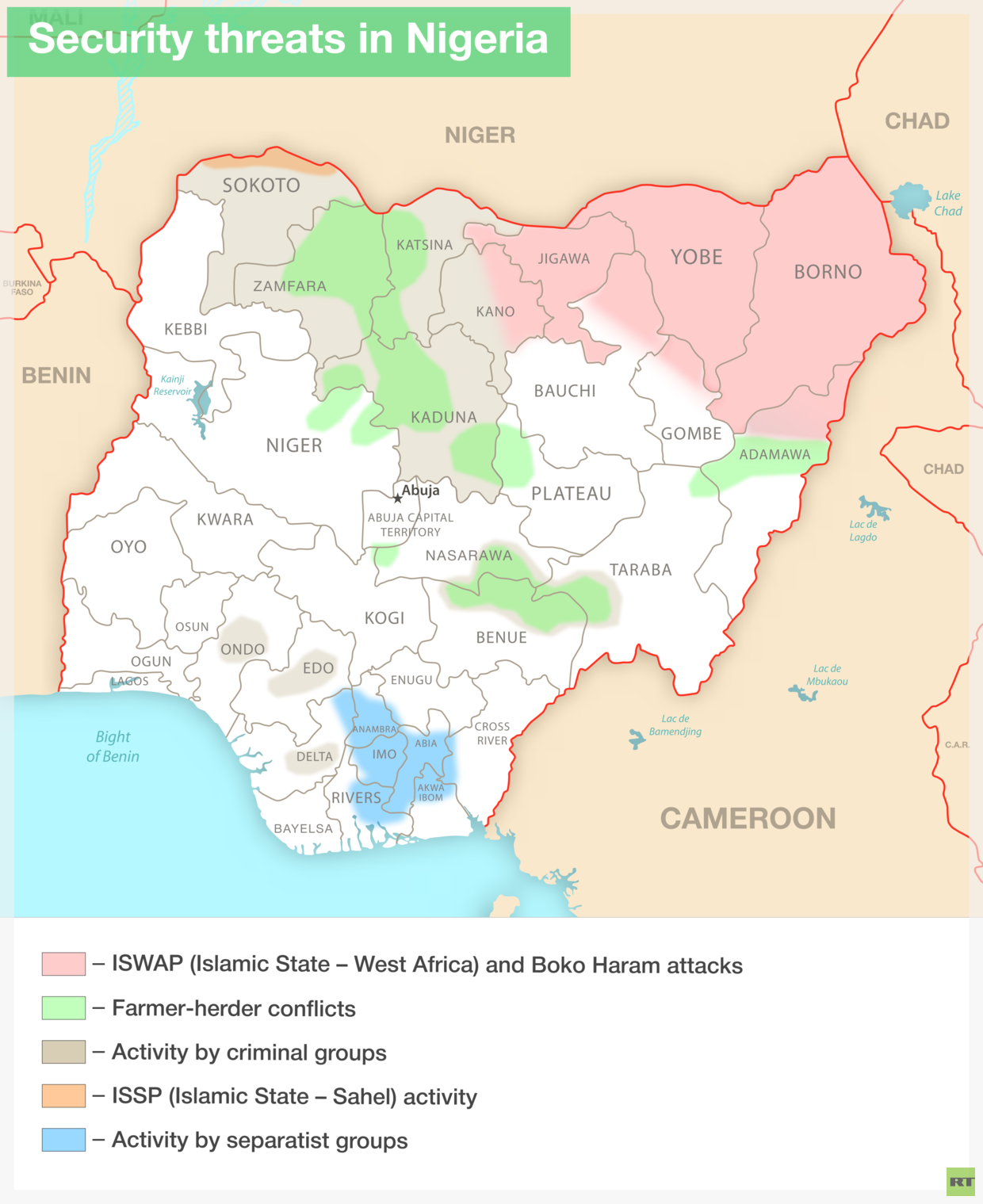
Armed men, as yet unidentified by the authorities, entered the village of Lajinge in Sokoto State at around 11 PM local time on Saturday and attacked residents until approximately 3 AM on Sunday.
Six members of one family were killed when their home was set on fire, according to witnesses. “They killed at least 12 people, injured four others, abducted women and children after rustling many livestock,” resident Auwal Hassan told Reuters by telephone.
Sokoto police spokesperson Ahmed Rufai also told the outlet that an investigation had been launched and that the force would provide further information later. No group has claimed responsibility for the attack.
The northwest region of Africa’s most populous nation has faced persistent attacks by heavily armed gangs commonly known as bandits. The groups raid rural communities, kidnap residents for ransom, steal livestock, and demand payments from farmers seeking access to their land.
Nigeria has also experienced an upsurge in mass abductions amid a worsening security crisis, despite President Bola Tinubu declaring a nationwide security emergency in November and ordering the recruitment of thousands of additional police officers and military personnel. Boko Haram, Islamic State West Africa Province and the Al-Qaeda-linked Ansaru group have been blamed for attacks on villages, churches, and schools, as well as mass kidnappings.

On May 15, gunmen seized 39 pupils and seven teachers from three schools in Oyo State. The authorities said 44 surviving captives were freed on July 10 following a military operation. Last November, 25 Muslim schoolgirls were abducted from a government school in Kebbi State, while about 230 children and teachers were seized days later from a Catholic school in neighboring Niger State. All were subsequently freed, according to the authorities. Last month, the government announced an expanded Safe Schools framework involving fencing, lighting, security personnel, and monitoring technology as part of measures to address the crisis.
On Sunday, the Nigerian Army said troops foiled an attempted “infiltration” of a military base in Zamfara State by terrorists. An army officer and a police officer were killed, while nine of an unspecified number of abducted civilians were rescued, the military said in a statement.
OPERATION FANSAN YAMMA: TROOPS REPEL TERRORISTS' INFILTRATION AT FOB KASUWAN DAJI, INFLICT HEAVY CASUALTIES AND RESCUE ABDUCTEES
— Nigerian Army (@HQNigerianArmy) August 2, 2026
Troops of Sector 2, Operation FANSAN YAMMA, deployed at the Forward Operating Base (FOB) in Kasuwan Daji, Kaura Namoda Local Government Area of… pic.twitter.com/gH2aGW8UeI
The US deployed around 200 troops to Nigeria in February for training and technical support after conducting joint airstrikes with Nigerian forces in December. Most have since been withdrawn, although Washington continues intelligence sharing and wider security cooperation with Abuja, according to the US Africa Command.
The deployment followed the withdrawal of French and US forces from parts of the wider Sahel, which reduced Western intelligence and military capabilities as armed groups expanded across the region.
Despite new US involvement, attacks and mass abductions have continued. In May, Amnesty International said a Nigerian military airstrike on the crowded Tumfa market in Zamfara State killed at least 100 civilians, including women and girls. The military confirmed conducting a strike but disputed reports of civilian casualties.
Samuel Memeh, chairman of the opposition Democratic Leadership Alliance, told RT last month that the US deployment “has not yielded significant improvements” in Nigeria’s security. He argued that foreign military assistance alone could not defeat the armed groups, saying that “local problems require local solutions.”